
Oak Frame Garden Rooms vs Extensions – Which Is Right for You in Devon?
If you're planning to add space to your home, you’ll likely end up deciding between two options:
An oak frame garden room
An oak frame extension
On the surface, they can look similar.
In reality, they serve completely different purposes — and choosing the wrong one can cost you thousands and leave you with a space that doesn’t actually work.
This guide will help you make the right call.
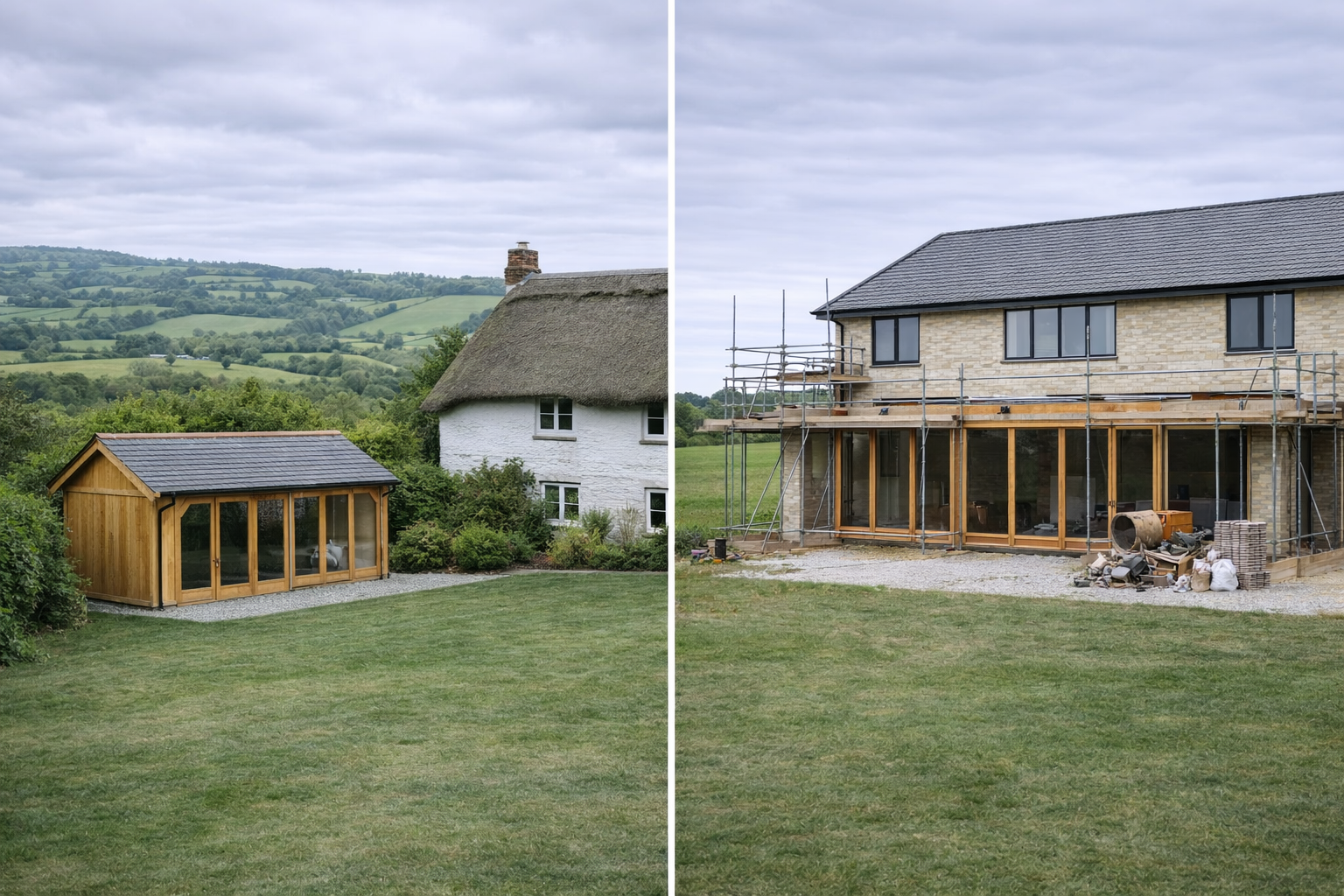
What Is an Oak Frame Garden Room?
An oak frame garden room is a separate structure, typically built in your garden.
It’s ideal for:
Home offices
Studios or creative spaces
Guest overflow (not full-time living)
Quiet, detached environments
👉 See: oak frame garden rooms in Devon
Key advantages:
Often falls under permitted development
Faster and simpler to build
Creates separation from the main house
Usually lower overall cost
Where people get it wrong:
They try to use a garden room like an extension.
If you need daily living space — kitchen, main lounge, family use — a garden room is usually the wrong solution.
What Is an Oak Frame Extension?
An oak frame extension is built onto your existing home, becoming part of your main living space.
It’s typically used for:
Kitchen extensions
Dining areas
Larger living spaces
Open-plan layouts
👉 See: oak frame extensions in Devon
Key advantages:
Adds real, usable living space
Increases property value significantly
Integrates fully with your home
Feels like a natural extension of your house
The trade-off:
Almost always requires planning permission
Higher cost
More disruption during build
The Real Decision: Separation vs Integration
This is the core difference — and most people don’t think about it properly.
Choose a garden room if you want:
Distance from the house
A quiet, dedicated space
A simpler, quicker project
Choose an extension if you want:
More space inside your home
A better kitchen/living layout
Long-term investment in your property
Planning Permission: A Key Factor
This alone can influence your decision.
Garden rooms are often permitted development
Extensions are far more likely to need planning
If you're unsure, read:
Do You Need Planning Permission for an Oak Frame Building in Devon?
(That’s not optional reading — that’s where most projects go wrong.)
Cost Differences (Be Honest With Yourself)
Let’s cut through the vague answers you’ll see elsewhere.
Garden rooms:
Lower base cost
Less groundwork
Less structural integration
Extensions:
Higher cost
Structural work with existing house
More design and planning involved
But here’s the mistake:
People choose a garden room to “save money”…
…and then realise it doesn’t solve their actual problem.
👉 Result: They end up doing an extension later anyway.
Which Adds More Value?
No competition here.
👉 Extensions win — every time
Why?
They increase liveable square footage
They improve how the house functions
Buyers understand and value them more
Garden rooms add value — but mostly as a bonus, not a core upgrade.
What Works Best in Devon?
Based on typical properties across Devon:
Larger plots = garden rooms work well
Cottages / tighter plots = extensions often make more sense
Rural settings = both can work, but planning constraints vary
This is where site-specific advice matters — not generic internet advice.
Common Mistakes (Avoid These)
1. Choosing based on cost alone
Cheap upfront often = wrong long-term decision
2. Ignoring planning constraints
This can completely dictate what’s possible
3. Underestimating how you’ll use the space
Be honest — daily living vs occasional use
4. Designing before deciding the structure type
This wastes time and money
So… Which One Is Right for You?
If you’re still unsure, ask yourself:
Do I need more space inside my home? → Extension
Do I want a separate, quieter space? → Garden room
That single question usually gives you your answer.
Need Help Deciding?
This is where getting it right early matters.
👉 Whether you're leaning towards:
We can help you assess what actually works for your property — and avoid going down the wrong path.